Silicone Coating Over TPO Brings This Commercial Flat Roof Back to Life
Flat roofs don't fail all at once. They wear down slowly - debris builds up, seams start to lift, problem spots develop around penetrations and drains. By the time you're dealing with leaks, the membrane underneath has already taken a beating. That's usually the point where most building owners are staring down a full replacement. But it doesn't always have to go that way.
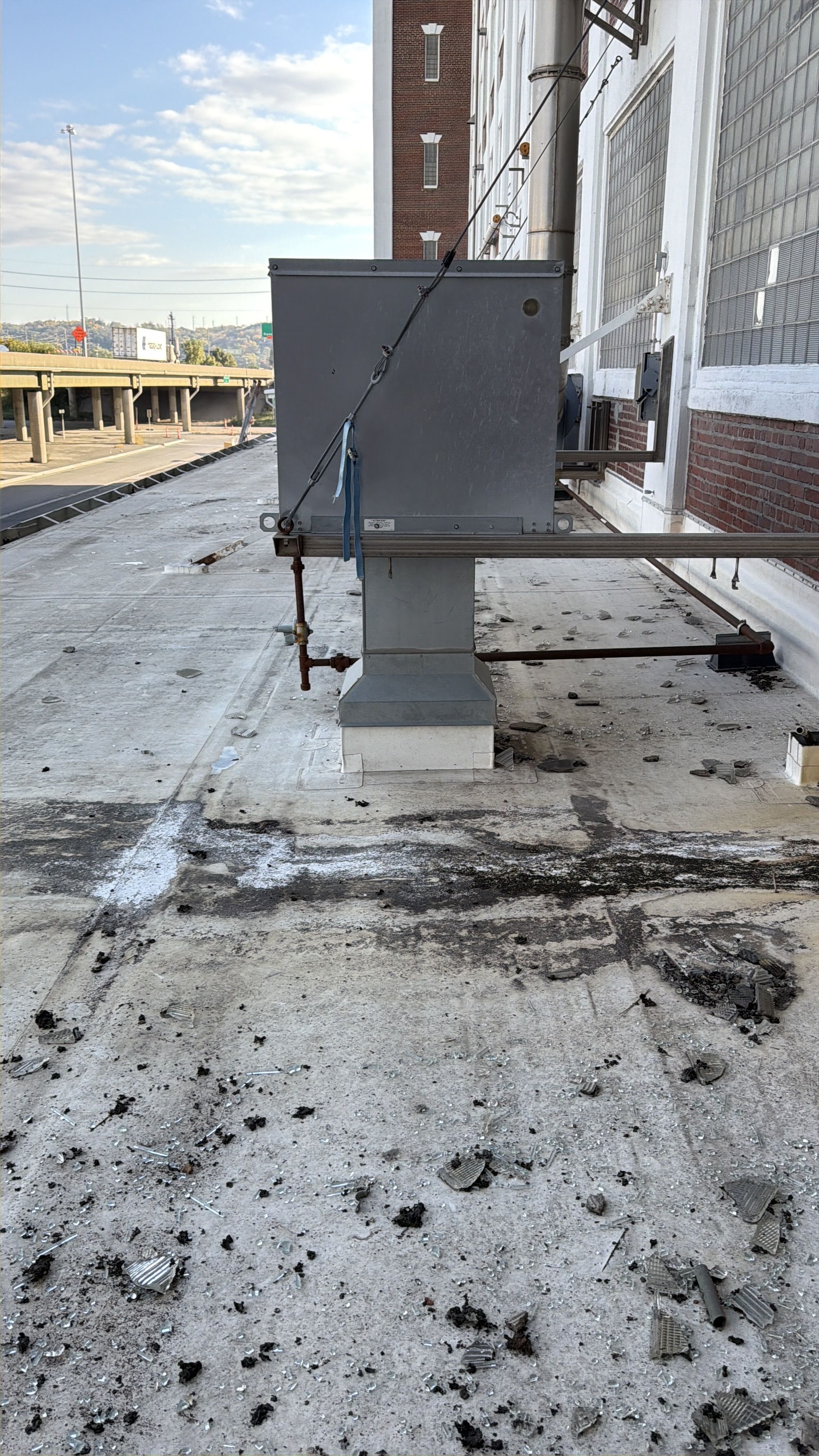
On this commercial building, the TPO membrane was showing its age. Debris scattered across the surface, dark staining around equipment curbs, and worn spots near penetrations - the kind of wear pattern that tells you water has been finding its way in. The roof wasn't at the end of its rope, but it was getting close. That's exactly the window where a silicone coating restoration makes the most sense.
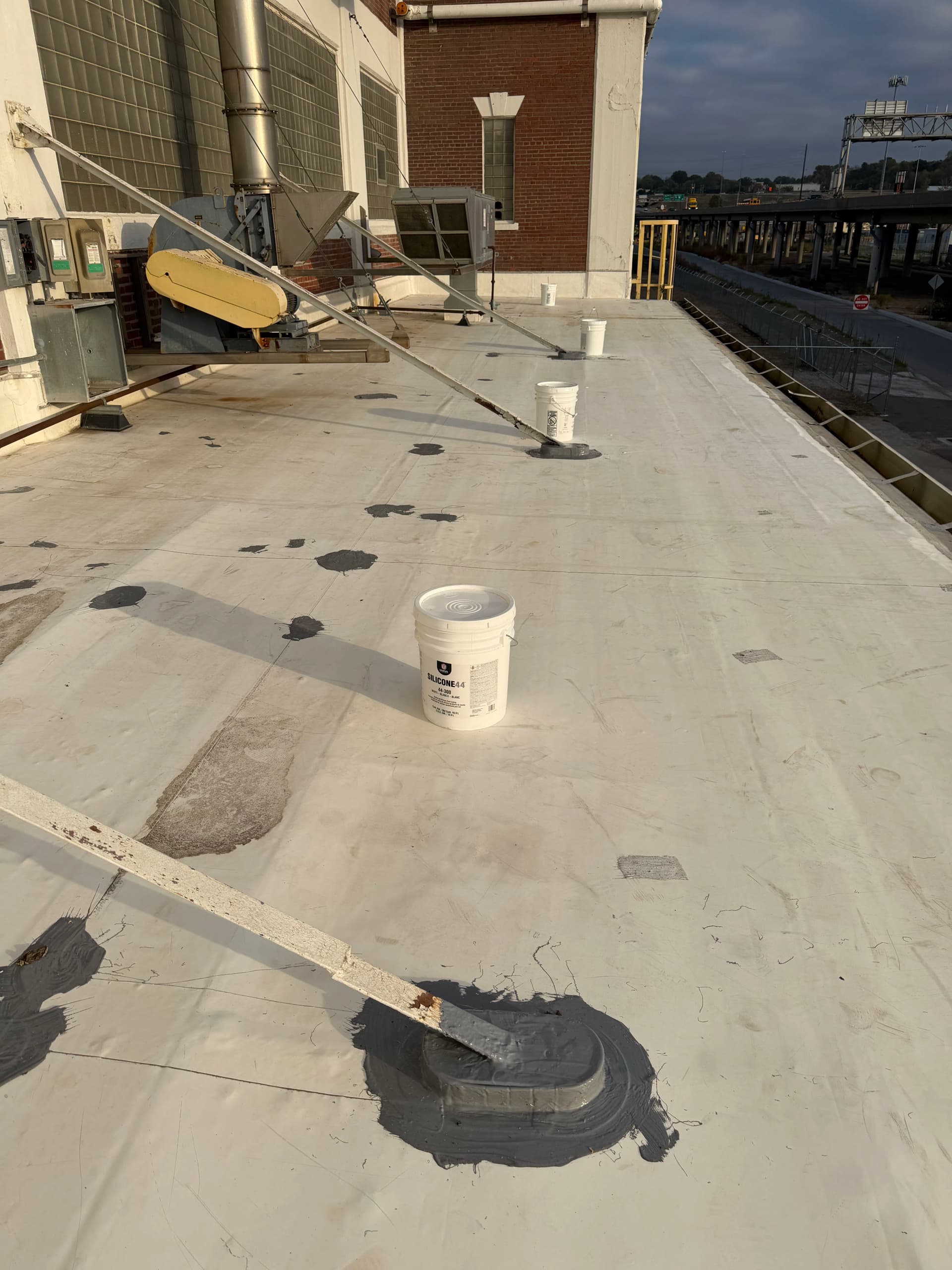
Here's what we did. We prepped the surface, addressed the problem areas - especially around the penetrations and curbs - and applied a silicone coating across the full field of the roof. Silicone 4.4 is what we used here. It bonds directly to TPO, stays flexible through temperature swings, and holds up against standing water without breaking down over time. That last part matters a lot on flat roofs, where water doesn't always drain as fast as it should.
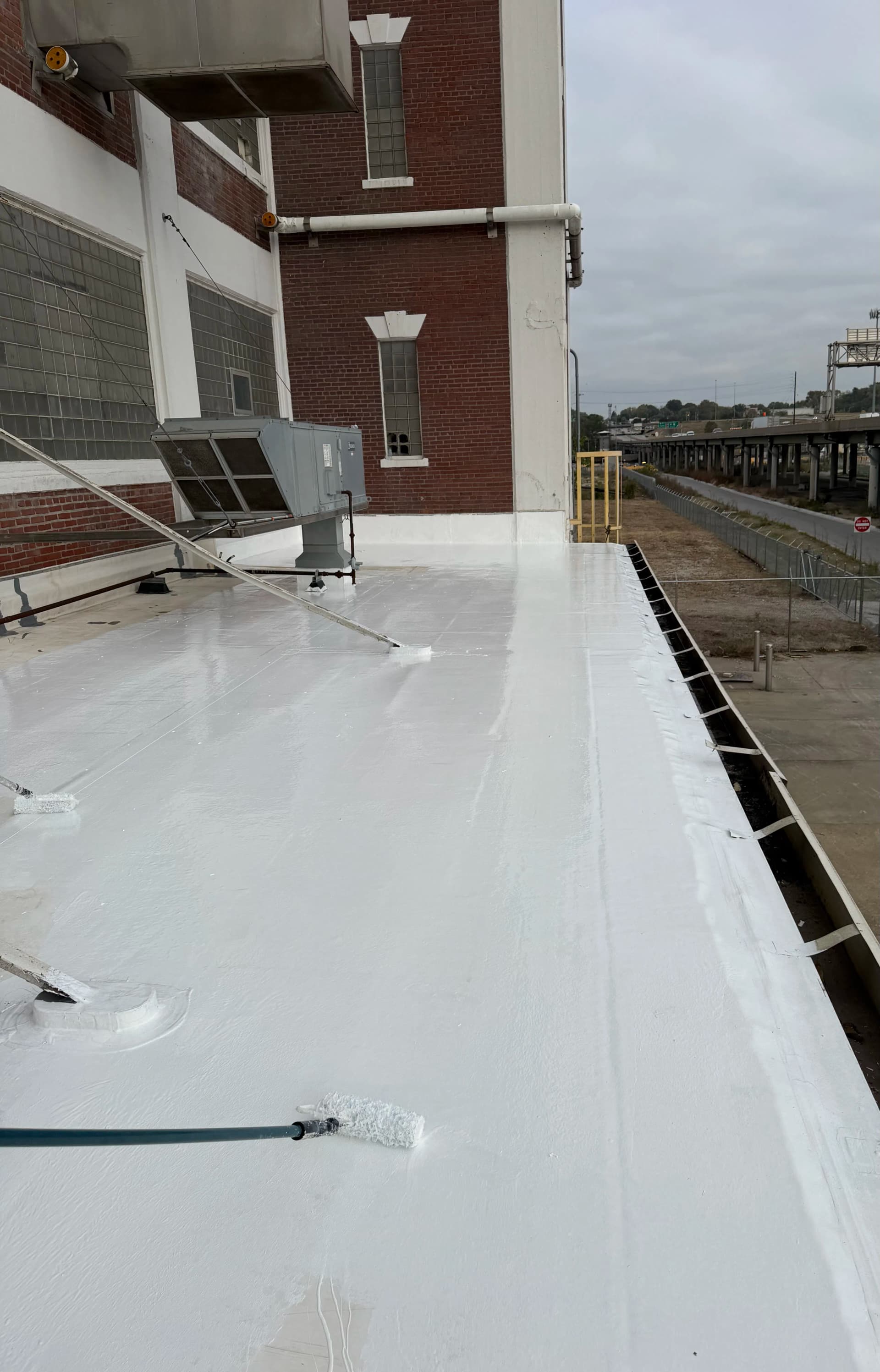
The finished surface is a clean, bright white. That's not just about looks - a reflective white coating reduces heat gain through the roof deck, which can ease the load on HVAC equipment over time. More importantly, the entire surface is now sealed and protected. The seams, the penetrations, the drain collars - all of it got attention before the coating went down.
A full silicone restoration like this one costs a fraction of what a tear-off and replacement would run. And it adds meaningful life back to the existing membrane. If your flat roof is starting to show wear and you're not sure whether it's time to replace or restore, that's a conversation worth having sooner rather than later.