Why Most Metal Roof Repairs Fail Before They Even Start
There's a big difference between patching a roof and actually fixing it. We run into the same story over and over - someone had work done, the leak came back, and now there's more damage than before. A lot of that comes down to one thing: the wrong approach from the start.
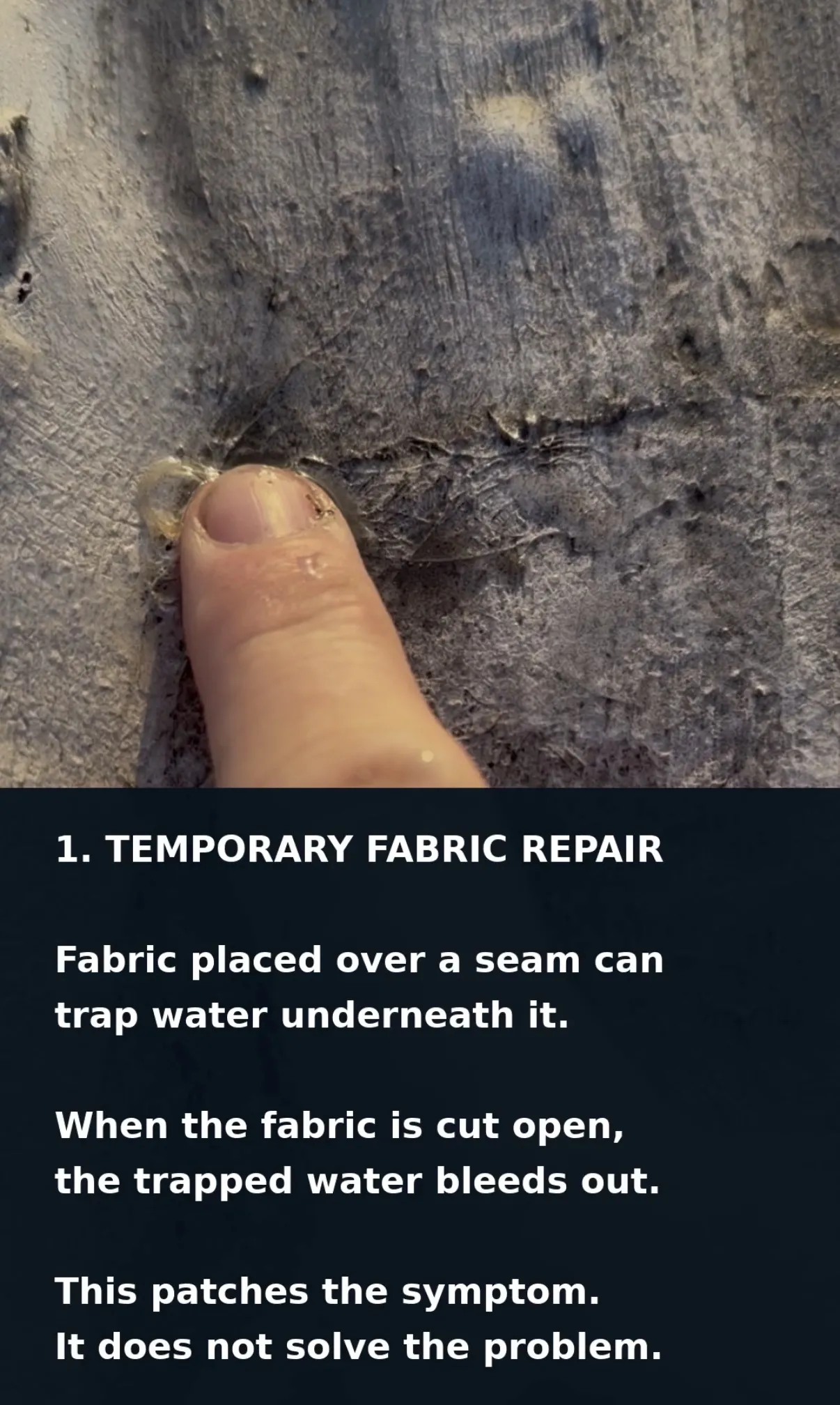
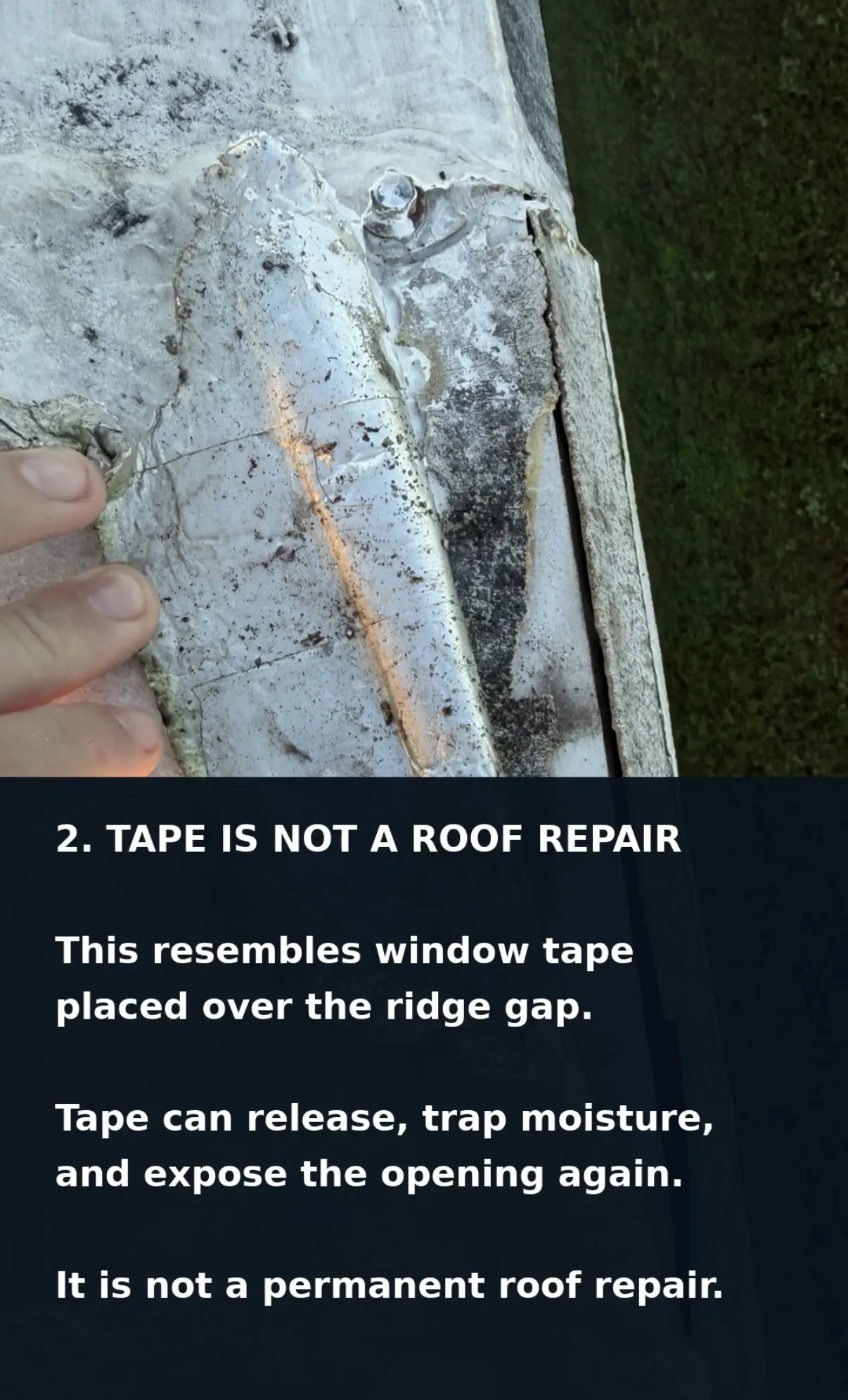
Take fabric placed over a seam, for example. It sounds reasonable. Cover the problem, seal it up. But fabric traps water underneath it. Cut it open and you'll see it bleed right out. That's not a repair - that's just hiding the symptom. Same goes for tape slapped over a ridge gap. Tape releases over time, lets moisture in, and the opening is right back where it started. Neither of those fixes addresses what's actually happening with the metal.
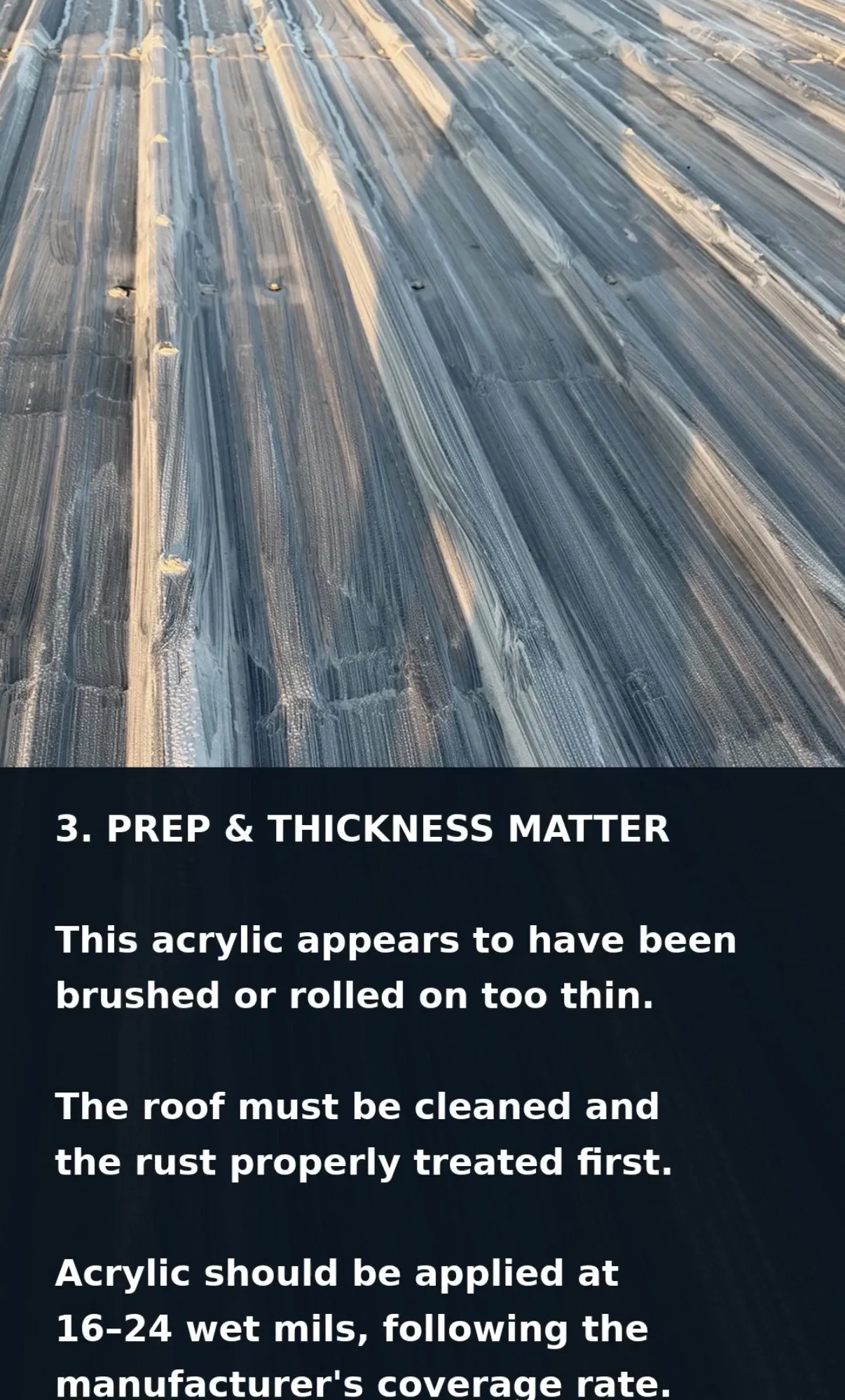
Coating is where we see the most shortcuts. Acrylic roof coatings are a legitimate solution when done right - but the roof has to be cleaned first, rust has to be treated, and the coating has to be applied at the correct thickness. We're talking 16 to 24 wet mils, following what the manufacturer actually requires. Roll it on too thin and you've just painted your roof. It won't hold up, and when it fails, it fails fast.
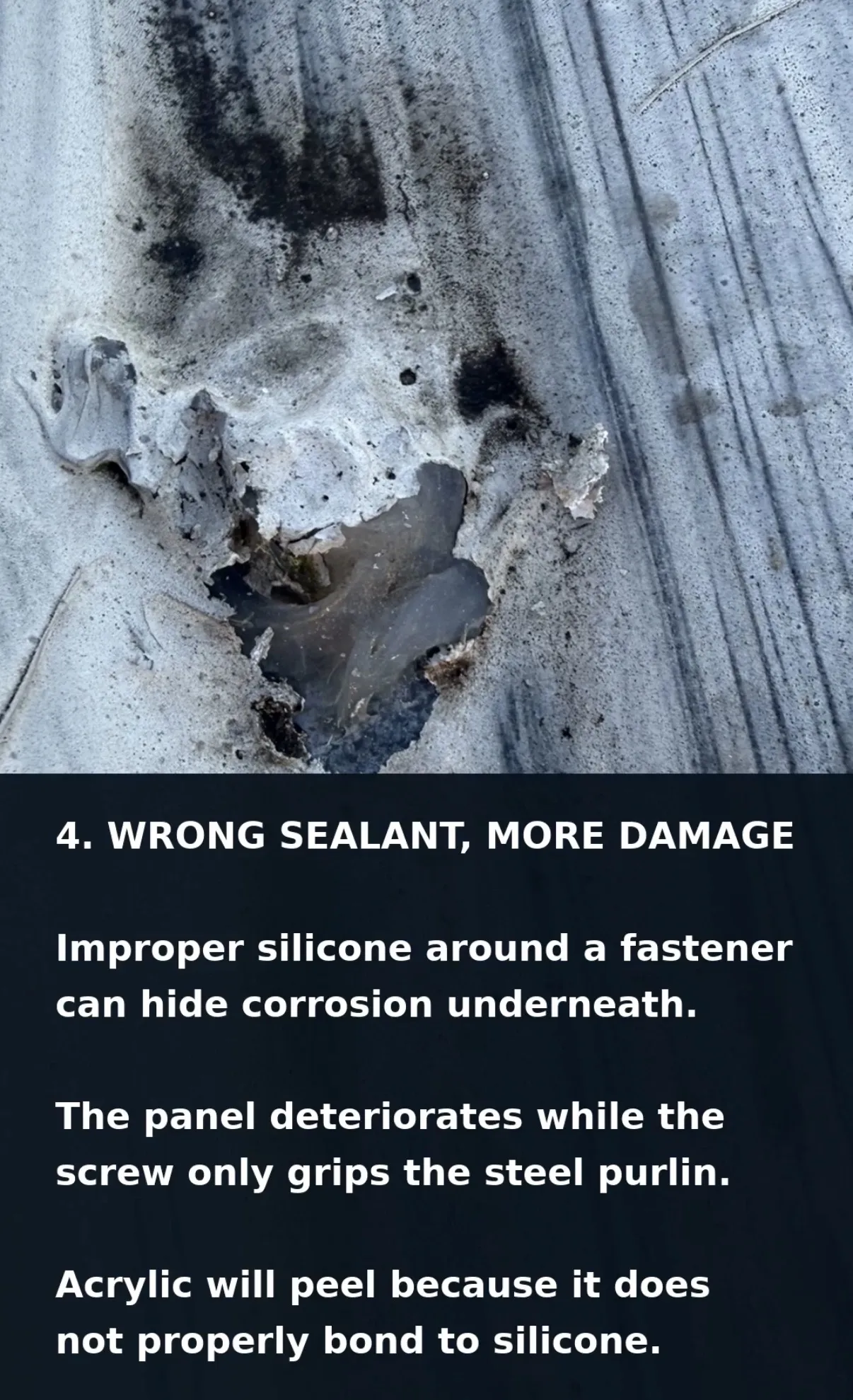
Then there's the sealant issue. Silicone gets used a lot because it's easy to work with, but when it's applied improperly around fasteners, it hides corrosion underneath while the panel keeps deteriorating. And here's the kicker - acrylic coating won't properly bond to silicone. So now you've got a fastener that's only gripping a steel purlin, hidden rust eating through the panel, and a coating that's going to peel right off. That combination is expensive to undo.
When we approach a metal roof repair or restoration, we're looking at what's actually going on before we touch a single material. The prep work, the right sealants, the correct coating thickness - none of that is optional if you want the work to last. If something on your roof doesn't look right, or if you've had it "repaired" before and you're not confident in what was done, we'll give you a straight answer about where things stand.